
⏰ Deadline: July 4, 2026
30% ITC + 100% Bonus Depreciation
The clock on the
30% commercial
solar tax credit
is running out.
Under IRS Notice 2025-42, commercial solar projects that properly begin construction on or before July 4, 2026 may preserve a placed-in-service window all the way to December 31, 2030. Projects that start after the deadline must be placed in service by December 31, 2027 — a much tighter window.
We design and build commercial solar, carports, and battery storage for SoCal businesses. We've been family-owned since 1970. We bring spreadsheets — not closers.
Beat the July 4 Deadline
Free commercial Energy Assessment + tax-incentive model within 1 business day.
Why July 4 matters
The federal commercial solar tax credit is still extremely valuable. Many qualifying projects may be eligible for a 30% federal Investment Tax Credit (ITC), with potential bonus adders for domestic content, energy community location, and low-income community designation. Many qualifying businesses may also be able to use 100% bonus depreciation on the first-year deduction.
But under IRS Notice 2025-42, the timing rules just got tighter. Projects that don't begin construction correctly by July 4, 2026 face a sharply shortened completion window.
Begin construction by Jul 4, 2026
Until Dec 31, 2030
Continuity safe harbor generally allows projects to be placed in service through end of 2030 to preserve full credit eligibility.
Begin construction after Jul 4, 2026
Until Dec 31, 2027
Project must be placed in service by end of 2027 or the credit may be lost. Much tighter window for engineering, permitting, and construction.
Commercial solar projects take months — utility interconnection alone can run 60–120 days. The July 4 deadline isn't a tax deadline. It's a project-planning deadline.
The federal incentive stack
Three programs you can layer on the same commercial install. Your CPA models your specific tax position — these are the levers most businesses use.
30%
Investment Tax Credit (ITC)
Under Section 48E, the Clean Electricity Investment Credit starts at a 6% base and steps up to 30% when prevailing-wage and apprenticeship requirements are met. Direct federal tax credit applied against your tax liability the year the system is placed in service.
100%
Bonus Depreciation
Under 2025 tax law changes, qualified property acquired after Jan 19, 2025 may receive 100% additional first-year depreciation. For commercial solar, the depreciable basis is typically reduced by half the ITC claimed — leaving roughly 85% of project cost available for first-year deduction.
+ Bonuses
Adders (Potentially +10% to +20%)
Additional +10 points each may be available for domestic content, energy community location, and low-income community designation (potentially +20 for the latter). Some projects may qualify for 40%, 50%, or more.
A $500,000 commercial solar project, by the numbers
Simple illustration. Your CPA will model your actual benefit based on your tax position.
| Item | Example Amount |
|---|---|
| Commercial solar project cost | $500,000 |
| Potential 30% federal ITC | $150,000 |
| Depreciable basis (after half-credit reduction) | $425,000 |
| Potential 100% bonus depreciation deduction | $425,000 |
| Tax savings from depreciation at 30% effective tax rate | $127,500 |
| Approximate combined first-year federal tax value | ~$277,500 |
Does not include utility savings, demand-charge reduction, battery economics, potential bonus adders (domestic content, energy community, low-income), state tax treatment, or long-term asset value. Your CPA will model your actual numbers.
Solar + battery, designed to your site
Rooftop, ground-mount, or carport — we engineer the right system for your roof, parking layout, and structural loads. Most commercial customers add battery storage to capture demand-charge savings and improve resiliency.
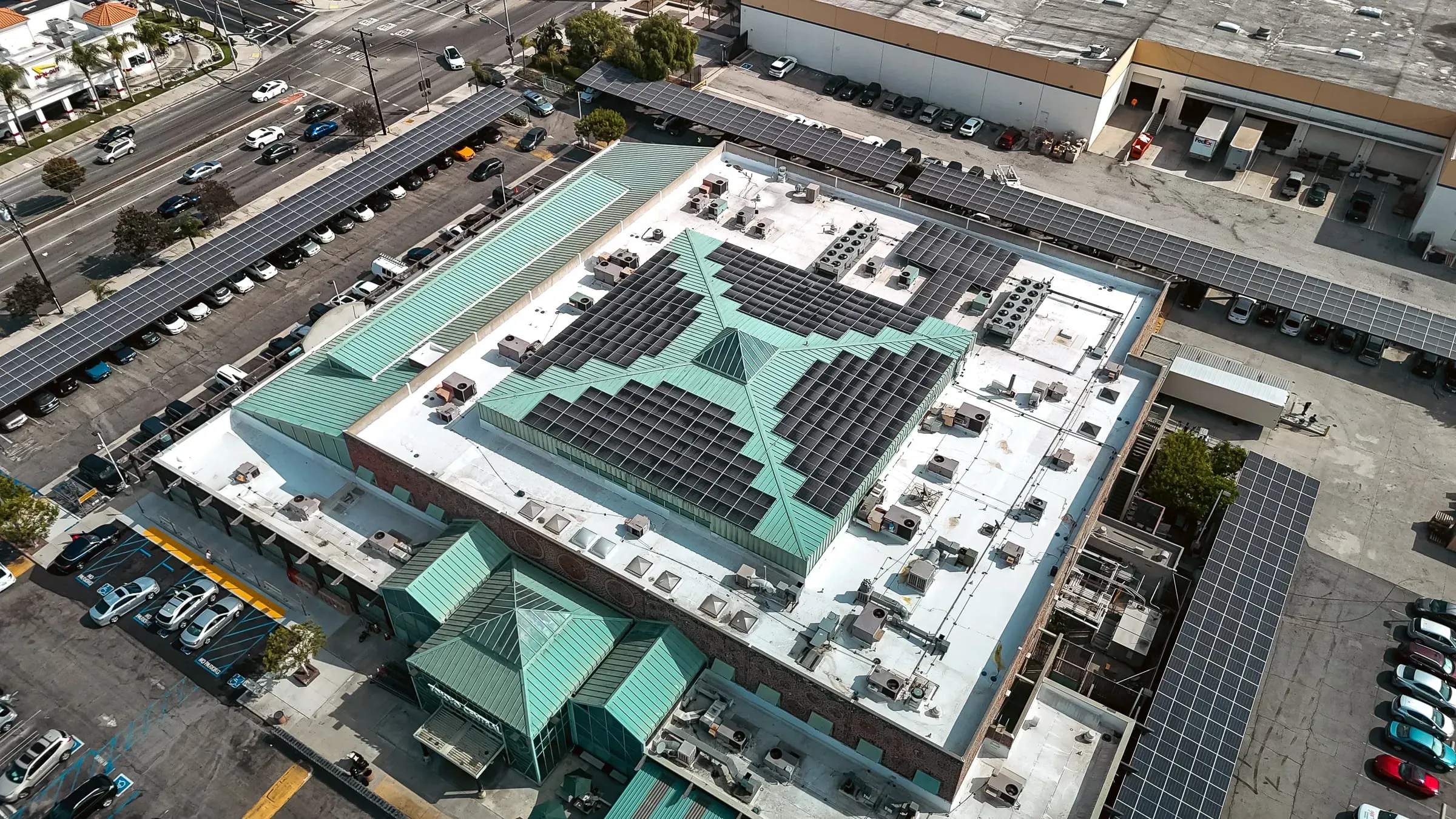
Rooftop Arrays
The most common commercial install — uses dead roof space, zero impact on parking or operations. For projects under 1.5 MW AC, the 5% safe harbor for beginning construction may still be available.
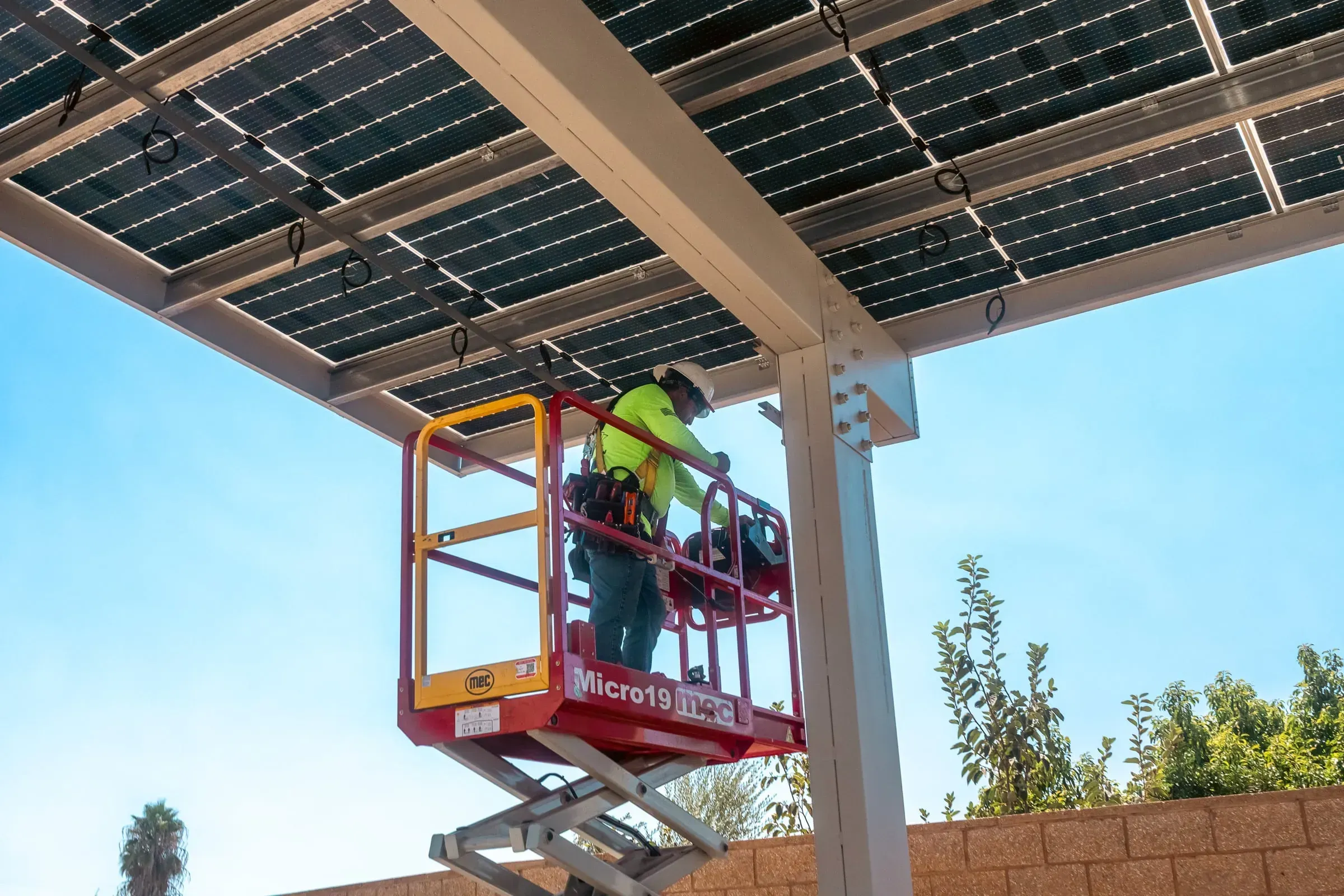
Parking-Lot Carports
Turn parking into generation. Carports deliver shaded parking (real customer-experience win) plus EV-charging integration. Larger projects qualify under the Physical Work Test for beginning construction.
Not just for-profit businesses
The commercial tax credit infrastructure includes provisions for tax-exempt and government-related entities through elective pay (also called direct pay). Eligible organizations can receive the value of certain clean energy tax credits even if they don't normally pay federal income tax.
For-profit businesses that can't fully use the credit may also have options through transferability — selling the credit to another taxpayer. Your CPA and tax counsel must structure these correctly.
We're a real contractor, not a broker
Option One Solar has been family-owned since 1970, with deep in-house electrical, solar, roofing, and fabrication experience. We don't sub everything out and we don't sell deals to investors.
We do the engineering, pull the permits, manage utility interconnection, file applicable rebates (SGIP for storage, regional incentive programs), build the project, and stay accountable through inspection and Permission to Operate.
Frequently Asked Questions
What's the July 4, 2026 deadline I keep hearing about?
What does 'beginning construction' actually mean?
What's the tax credit actually worth?
What about 100% bonus depreciation?
Can nonprofits, churches, schools, or government entities benefit?
How long does a commercial solar project actually take?
Do you only build for big businesses, or smaller commercial too?
Is this tax-credit information guaranteed?
Important tax disclaimer
Option One Solar does not provide tax, legal, accounting, or financial advice. Federal tax credits, bonus depreciation, MACRS depreciation, direct pay, transferability, domestic content bonuses, energy community bonuses, low-income community bonuses, and other incentives depend on each customer's specific facts and circumstances. Customers should consult their CPA, tax advisor, and legal counsel before relying on any tax incentive, depreciation benefit, or projected tax savings.
Don't wait for the deadline to wait for you.
Free commercial Energy Assessment. We'll review your last 12 months of utility bills, your roof or parking layout, and coordinate the begin-construction timeline with your CPA — then deliver a custom design within 1 business day.
Start the Tax-Deadline Review
Custom design + tax-stack model within 1 business day.